
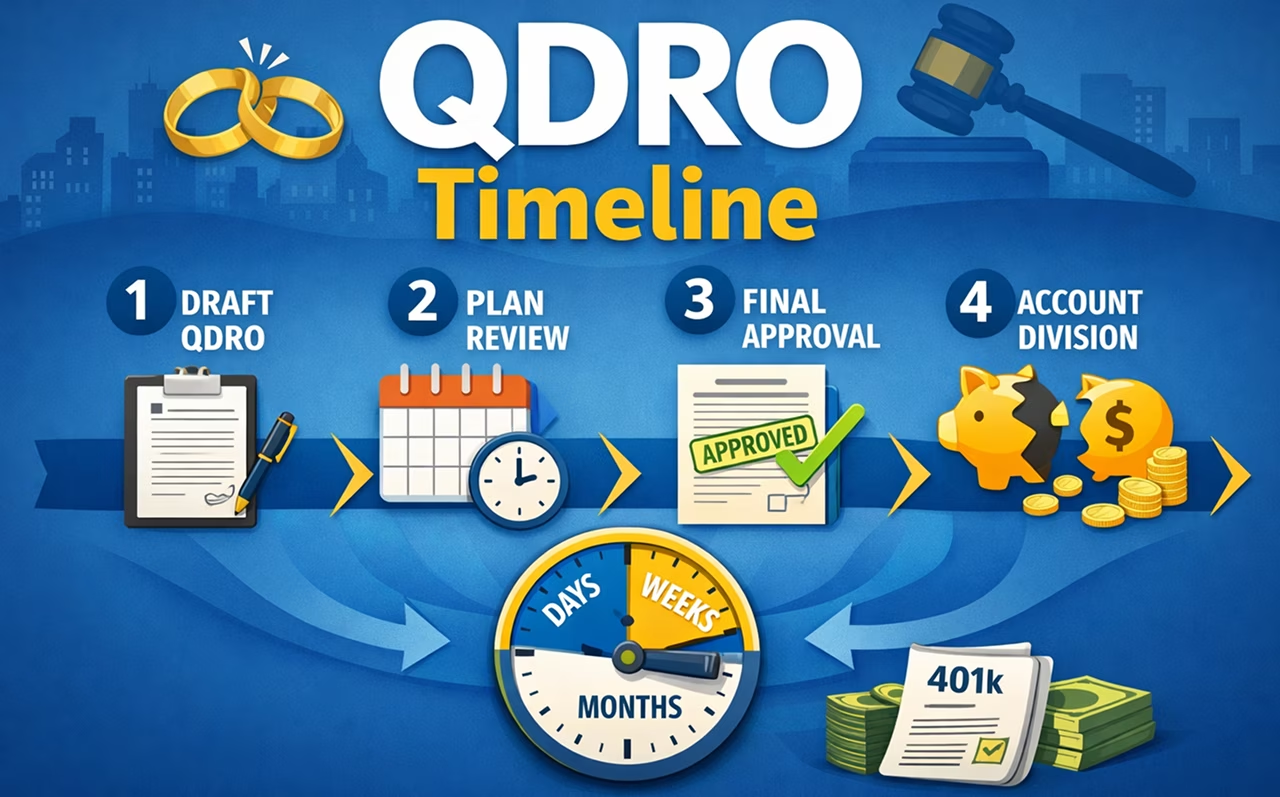
If there’s one part of the divorce process that consistently catches people off guard, it’s how long a QDRO can take to complete. Clients often assume that once the divorce is finalized, dividing a retirement account is mostly a matter of paperwork and a few weeks of waiting. The reality is more complicated.
In most cases, the process takes longer than people expect — not because the work itself is slow, but because of the number of independent steps involved, most of which are outside of anyone’s direct control. Setting realistic expectations at the start saves a lot of frustration later, and helps avoid the all-too-common scenario where a QDRO stalls for months after the divorce is already final. This guide walks through the full QDRO timeline, step by step, so both attorneys and divorcing clients know what to expect and where the process is most likely to get stuck.
Why the QDRO Timeline Is So Variable
Before walking through the individual steps, it’s worth addressing why QDRO timelines resist simple estimates. A lot of it comes down to the specific retirement plan being divided and the administrator handling it. Private 401(k)s, state pensions, municipal pensions, federal plans, and military benefits all follow different rules and different review processes.
Beyond that, the quality of the separation agreement language matters enormously, since vague or incomplete language is one of the most common causes of QDRO delays at the drafting stage. And when multiple QDROs are needed, each one moves on its own independent track.
The honest framing to carry into the process is this: expect variability, and don’t assume things will be quick. Some QDROs wrap up in a matter of weeks. Others can take much longer. More often than not, this wide variability simply reflects the specific plan or plans involved.
Step 1: Drafting the QDRO (3–5 Business Days)
The QDRO process begins with a careful review of the separation agreement, any supporting documents, and the specific retirement plan’s requirements. Once complete information is in hand, drafting the initial QDRO typically takes three to five business days.
That timeline can stretch when the separation agreement uses ambiguous language that has to be clarified, when complex calculations are involved (such as equalizing multiple accounts, for example), or when multiple plans each need their own draft. The single biggest thing clients and attorneys can do to keep this step on track is to provide complete plan information up front. This can include recent statements, plan summary documents, and any plan-specific QDRO procedures.
Ensuring the separation agreement language is specific enough that it doesn’t invite interpretation is also paramount to an efficient QDRO process. Every ambiguity that has to be resolved by follow-up email adds time.
Step 2: Plan Administrator Pre-Approval (One Day to Several Months)
This is typically the most unpredictable phase of the timeline. Once the draft QDRO is submitted to the plan administrator for review and pre-approval, the process is entirely in their hands. It can take anywhere from a single day to several months, and there is no reliable way to hurry it along from the outside.
If you are working with a third-party QDRO drafting service, it’s important to note that many plan administrators will not speak to these drafting services over the phone without the plan participant on the line, making concrete updates more challenging to obtain.
A few general patterns do emerge, though they’re far from hard rules. Larger private plans with well-known 401(k)s and pensions that process QDROs regularly tend to move more quickly because they have established procedures and dedicated staff. State and municipal pensions often take longer; their review queues can stretch into months, and their requirements tend to be more prescriptive.
But the trickiest plans are frequently the small, obscure ones. With these, simply identifying where to send the draft for pre-approval can take real digging, and the HR contact on the other end may have never handled a QDRO before. Even a clean, straightforward draft can sit for weeks while someone at the employer figures out the process internally.
There’s no reliable way to predict speed by plan type — the plan administrator drives the timeline. The variability comes from the specific administrator, their workload, and their familiarity with QDROs, not from easy-to-predict categories.
This is also where having multiple plans has the biggest compounding effect. Two plans don’t necessarily mean twice the time, since they can often run in parallel, but each one is its own independent process, and the overall timeline gets driven by whichever plan is slowest.
Step 3: Final Document Delivery (1 Day)
Once the plan administrator signs off, the pre-approved QDRO is delivered to the client or attorney along with filing instructions. This step itself is quick, usually a single day.
But it’s also where a common misconception sets in, and it’s worth naming directly: QDRO pre-approval is not the finish line. Receiving the final document means the plan administrator has confirmed the language works. It does not mean the order has been signed by a judge, and it does not mean the retirement account has actually been divided. The most important remaining steps are still ahead.
Step 4: Court Filing and Final Processing (1–3 Weeks)
On paper, this step takes one to three weeks. In practice, it’s where QDRO cases most often stall, sometimes for months.
The remaining work involves reviewing the QDRO for accuracy, obtaining signatures from both parties, submitting the signed order to the court for judicial approval (in Massachusetts, typically through Probate and Family Court), and mailing the court-approved original to the plan administrator at the correct address.
The reason this step causes so much delay is almost always the same: a breakdown in coordination. Each side assumes the other is handling the next task. One party thinks their attorney is filing the order. The other attorney thinks opposing counsel is getting it signed first. The document drifts from inbox to inbox, and weeks or months go by with no real progress.
This is the single most preventable source of delay in the entire QDRO process. Unlike plan administrator review, which truly is outside of anyone’s control, the post-pre-approval steps are fully in the hands of the parties and their attorneys. Clear, explicit communication about who is doing what, and by when, is the difference between wrapping up in a few weeks and losing half a year.
Setting Realistic Expectations for the QDRO Process
There are a few principles worth carrying through the QDRO process. The first is simply to plan for variability. The same type of order, prepared the same way, can see completion times vary by months based on the plan administrator alone.
The second is to start the QDRO process as soon as possible after the divorce is finalized, since market movement, job changes, and participant retirements can all complicate a QDRO that sits too long.
The third, and maybe the most important, is to assign clear ownership for the final steps before the pre-approved document even arrives. Both parties and their attorneys should know exactly who is responsible for circulating signatures, filing with the court, and mailing the final order to the administrator.
Above all, it’s important not to confuse QDRO pre-approval with completion. QDRO preparation is only part of the process. Until the court-approved order is in the plan administrator’s hands and the retirement account has actually been divided, the QDRO isn’t done, and the outcome the divorce was intended to produce isn’t yet in place.
Understanding the QDRO timeline, and knowing where it tends to stall, is what makes the difference between a process that moves forward cleanly and one that drags on long after everyone thought it was over.
If you’re going through a divorce and want to avoid unnecessary delay, working with a team that handles QDROs regularly can make the process far more predictable.
Learn more at www.clearwaterdivorce.com.